AI Staff Scheduling for Hospitality: Smarter Rostering with Data
AI staff scheduling for hospitality: how to achieve 4–8% lower labour costs per cover and 60–80% less planning time for managers using reservation data, weather forecasts and historical occupancy.

AI staff scheduling for hospitality is one of the few areas in 2026 where technology delivers direct financial value without guests noticing anything. Labour costs for most restaurants and hotels sit between 32 and 42% of revenue, and one poorly chosen Saturday evening rota can easily wipe out the entire week’s profit. AI does not help by replacing the manager, but by providing better raw input: how many guests are likely to arrive, which shifts require which staffing levels, and where there is flexibility to start someone later or send someone home earlier.
Want to keep reading? Also see the complete AI customer service guide 2026, AI capacity management for hospitality or schedule a free planning audit for your business via contact.
Why staff scheduling in hospitality is structurally too expensive
According to industry data from KHN and HOTREC, the average restaurant manager spends 4 to 7 hours per week creating and adjusting rotas. Those hours are not spent on guests, not on the team, and not on the menu. Moreover, the outcome is rarely optimal: research from Cornell Hospitality shows that manual rotas average 8–14% overstaffing during quiet periods and 5–9% understaffing during peak moments. Both are expensive: overstaffing directly increases labour costs, while understaffing damages tips, reviews and repeat visits.
What AI specifically contributes to scheduling
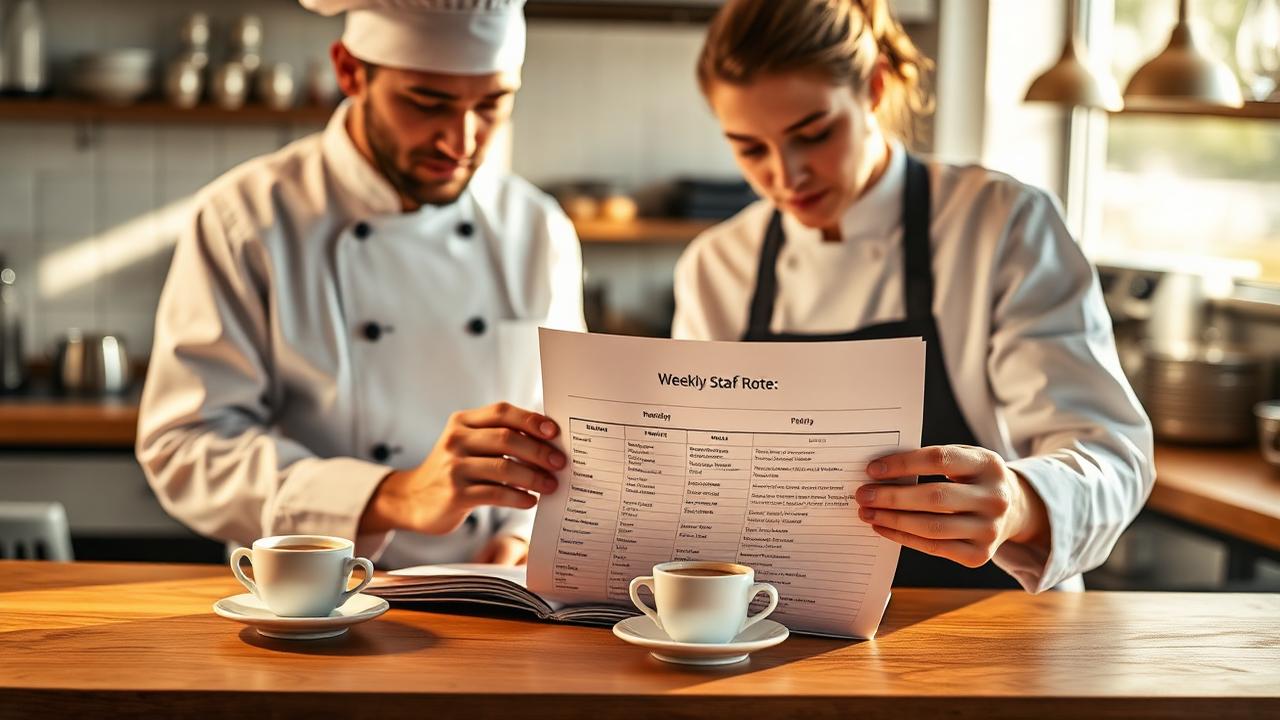
AI rostering does not replace the manager, but provides a strong starting proposal that is 80% accurate. The four inputs that make the biggest difference are: reservations for the coming two weeks, historical occupancy per shift slot, weather forecasts (crucial for terrace seating), and local event calendars. Using these inputs, an AI model predicts expected guest flow per hour, translates that into required staffing levels by role (kitchen, service, reception), and generates a rota that complies with legal rest periods and staff availability. The manager adjusts the final 20% based on knowledge that is not captured in data.
The data you need to get started
An AI planning system only works properly after two to three months of historical data. At minimum you need: reservation data per day and shift (from your reservation system), actual covers served (from your POS), staff hours per shift (from your time-tracking system), and weather data (free via KNMI or similar providers). Without this basic layer, every AI suggestion is a guess. Restaurants without historical data usually begin with an eight-week pilot period during which the system observes without directing, and only then actively suggests rotas. See also AI capacity management for hospitality for broader context.
What goes wrong in practice without AI support
The three classic mistakes in manual scheduling are identical across the Netherlands, Belgium and the rest of Europe. First: last week’s rota is copied, even though this weekend has two additional large reservations or the terrace evening will be ruined by rain. Second: senior staff are routinely assigned to the heaviest shifts, which appears efficient in the short term but leads to burnout and staff turnover over time. Third: adjustments happen too late, meaning you are still trying to contact casual staff at 16:00 on Thursday for a fully booked Friday. AI addresses all three by looking 7–14 days ahead and signalling issues early.
Including legal rest periods and availability
A good AI rostering system never schedules against the law. It automatically accounts for minimum rest periods between shifts (11 hours in the Netherlands), maximum weekly hours per contract, youth employment rules for employees under 18, and personal availability submitted by employees through an app. For Dutch hospitality businesses, the Working Hours Act standards are strict: a rota that breaches them can immediately result in fines and reputational damage during an inspection. AI validates in advance; manual rotas often only validate afterwards.
Weather and events: the two underestimated variables
For hospitality venues with terraces or outdoor seating, the weather changes everything. A 40-seat terrace on a sunny Saturday can mean 35–50% more revenue compared with a rainy day; the rota must adapt accordingly. AI can incorporate weather forecasts from KNMI days in advance and make shifts more flexible (for example, two "flex-call" shifts only confirmed 24 hours beforehand). The same applies to local events: a football match, festival or city run predictably increases or decreases guest flow. Together, these two variables explain up to 30% of weekly revenue fluctuations.
The manager remains ultimately responsible
Important: AI suggests, the manager decides. This is not a semantic nuance but legally and operationally essential. The manager understands team dynamics, knows that employee X has just returned from sick leave and that employee Y always needs to leave a bit earlier on Fridays for personal reasons. This knowledge is rarely fully captured in data. A good system shows the reasoning behind each shift ("expected occupancy 82 covers based on 34 reservations + historical average walk-ins 48"), after which the manager can make informed adjustments.
Multilingual teams: language is not a side issue
In Dutch and Belgian hospitality, more than 40% of staff are non-Dutch-speaking. An AI rostering system communicates with employees in their own language (Polish, Romanian, Spanish, Portuguese, English) via an app or WhatsApp. Rota changes, sickness reports and shift-swap requests are handled in the correct language, preventing miscommunication. According to practical research by Skift, multilingual teams using single-language communication make three times as many scheduling errors.
KPIs to measure scheduling effectiveness
Do not only measure labour costs as a percentage of revenue; that is too broad. The four sharper KPIs are: labour cost per cover sold (with ranges varying significantly by segment), staff revenue ratio per hour (revenue per worked hour), no-show percentage among casual staff, and average overtime hours per week. AI scheduling improves all four metrics: labour cost per cover typically falls by 4–8%, no-shows on call shifts are halved (from 12–15% to 5–7%), and overtime decreases by 15–25%. These figures come from implementations at mid-sized European restaurant chains (Statista hospitality benchmarks).
What AI does not do in staff scheduling
AI does not handle difficult conversations. It does not communicate dismissals, schedule performance or appraisal meetings, or decide on promotions or pay rises. It also does not make moral judgements about scheduling someone who has just returned from bereavement leave, or assigning staff during public holidays. These remain explicitly human responsibilities. AI handles logistics so that managers have more time for precisely these human conversations.
Integration with existing systems
An AI rostering system has little value if it cannot communicate with your existing software. The four most important integrations are: your reservation system (for expected covers), your POS (for actual covers and revenue), your time-tracking system (for actual worked hours), and your payroll system (for costs). Without these integrations, the system remains an isolated tool that creates duplicate work. Most Dutch restaurants already have standard integrations with common providers; check this before choosing a system. See also the hospitality implementation checklist.
What it delivers in practical terms
Restaurants and hotels using AI-supported scheduling for twelve months report on average: 4–8% lower labour costs per cover, 60–80% less time spent on scheduling by managers, 15–25% less overtime, and measurably lower staff turnover (employees appreciate consistent and fair rotas). The payback period for a system is typically between three and six months for mid-sized businesses. For smaller businesses (fewer than 15 employees), the absolute gain is lower but proportionally similar. For the broader business case, see the complete AI customer service guide 2026.
Would you like a free planning audit for your business? Schedule a no-obligation conversation via contact or view the pricing directly. Further reading: AI capacity management for hospitality, AI email for restaurants and hospitality implementation checklist.
See HorecaHub.ai in your business
In 20 minutes we show live how our AI colleague handles calls, emails and chats from your guests.

Frequently asked questions
Sources
Read also
Written by

Martin Jurres
CCO of HorecaHub.ai
Driven by innovation and hospitality, Martin is building the commercial growth of HorecaHub.ai. With experience in sales, partnerships, and product demos, he translates AI technology into real value for hospitality entrepreneurs. His goal: to make every business run smarter, with less hassle and more profit. On this blog he shares hands-on lessons from conversations with hundreds of restaurants, hotels and cafés.
Topics